
Contact Us
© 2025 Living Spaces Interiors. All rights reserved.
Maitidevi, Kathmandu
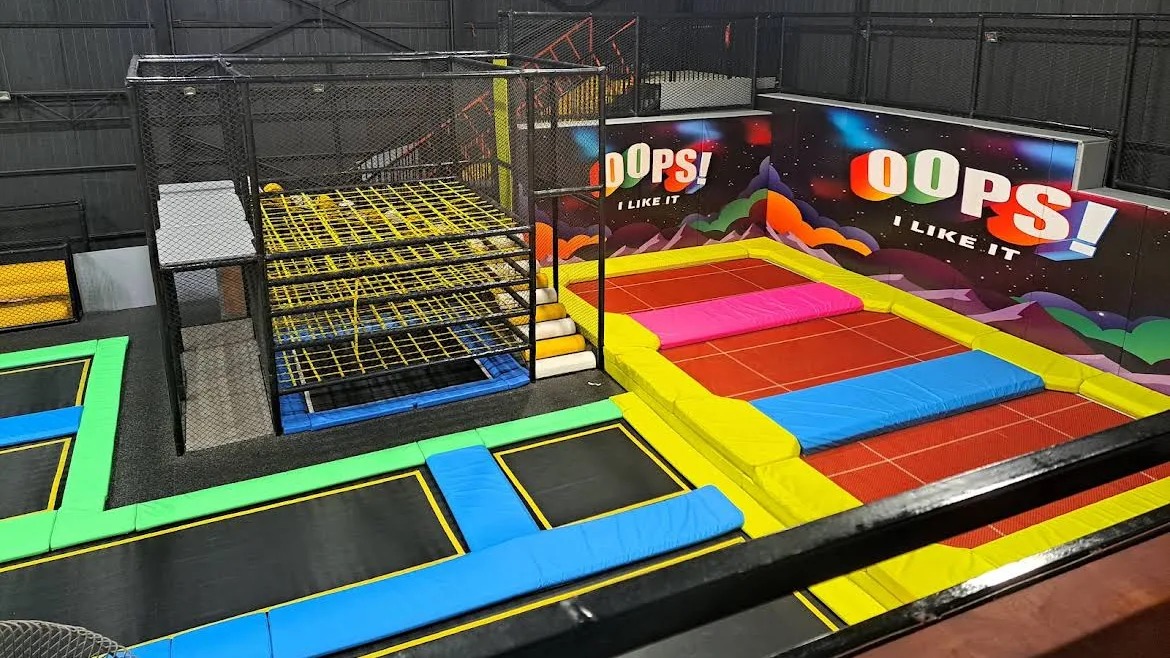
OOPS Indoor Entertainment Park
OOPS Indoor Entertainment Park, Kathmandu
Entertainment design is among the most technically and atmospherically demanding categories in interior practice. Unlike a hotel room or a restaurant — where the guest is largely still — an entertainment environment must perform at full intensity across every square metre, at every hour of operation, for an audience that ranges in age from five to fifty-five. Every element must do two things simultaneously: hold up structurally under relentless high-traffic use, and deliver a visual and sensory experience energetic enough to feel genuinely exciting.
OOPS Indoor Entertainment Park in Kathmandu is one of Nepal's largest and most ambitious indoor leisure destinations. Living Spaces Interiors was engaged as the interior design partner for this project in collaboration with a lead architect based in India — a cross-border creative partnership that required close coordination across lighting design, spatial planning, and the specification of banquet and bar environments within the wider entertainment complex.
Project Overview
| Detail | Description |
|---|---|
| Client | OOPS Indoor Entertainment Park, Kathmandu |
| Project Type | Entertainment & Leisure Interior — large-scale indoor amusement and dining complex |
| Collaboration | Joint engagement with a lead architect based in India — Living Spaces led interior detailing, lighting design, and the banquet and bar area fit-out |
| Scope of Work | Customised lighting design across the entertainment floor, banquet hall interior, bar area design, and material and finish coordination throughout guest-facing spaces |
| Location | Kathmandu, Nepal |
| Environment | High-traffic, multi-use entertainment complex — open to families, groups, and corporate visitors across all hours of daily operation |
The Brief
An indoor entertainment park in Kathmandu faces a specific design challenge: the city already provides extraordinary visual intensity — the density, the colour, the movement of its streets. To capture a guest's attention and hold it, an entertainment environment must be more vivid, more deliberately stimulating, and more carefully choreographed than anything outside its walls.
The brief for OOPS was clear in its ambitions. The space needed to feel genuinely exciting to a child arriving for the first time and genuinely comfortable to a parent accompanying them. It needed to absorb thousands of visitors across a week of operation without showing the fatigue that high-traffic environments inevitably accumulate. And it needed to house, within the same complex, a banquet hall and bar that could serve a corporate dinner or a private celebration to a standard entirely distinct from the energy of the gaming floor — without either environment compromising the other.
Cross-Border Collaboration
The engagement with the Indian lead architect was an exercise in disciplined design integration. Architecture and interior design, at this scale, must arrive at the same visual and operational conclusions from different starting points — the architect working from structure and envelope, the interior designer working from surface, light, and experience.
Living Spaces' role within the collaboration was defined early: we owned the lighting narrative across the entertainment floor, the interior specification of the banquet hall, and the design and fit-out of the bar area. Within those boundaries, we operated with full creative responsibility — delivering against the project's overall concept while bringing the depth of material and experiential knowledge that Kathmandu-based hospitality and leisure design demands.
Lighting as the Primary Design Instrument
In most interior projects, lighting is designed after the spatial concept is established. In an entertainment environment at this scale, the reverse is true — lighting is the concept. The colour, movement, intensity, and control of light is what transforms a large open floor housing arcade equipment into an experience. It is what makes a guest feel, within seconds of entering, that they have arrived somewhere extraordinary.
For OOPS, Living Spaces developed a layered lighting scheme that operated at three scales simultaneously. At the architectural scale, LED strip runs and neon-effect ceiling installations defined the geometry of the space — drawing the eye upward and establishing a sense of controlled spectacle. At the zone level, lighting colour temperature and intensity shifted across different activity areas — more intense and saturated around the gaming machines, softer and warmer in the circulation and seating zones. At the detail level, individual equipment bays were lit to enhance the visual identity of each game type, increasing dwell time and spatial legibility.
The lighting scheme was commissioned as a standalone design discipline — specified with full control zoning to allow the atmosphere to be adjusted across the day, from afternoon family sessions to evening group events, without a single physical change to the space.
Banquet Hall Design
The banquet hall at OOPS was designed to operate as an entirely self-contained hospitality environment — acoustically, visually, and experientially distinct from the entertainment floor it adjoins. A family celebration held in the banquet hall should feel like a considered private event, not an extension of the arcade beyond the partition wall.
The interior treatment was developed around flexible formality — a material palette and lighting scheme capable of reading as a children's birthday party venue in the afternoon and a corporate dinner setting in the evening. Wall treatments, ceiling detailing, and furniture specification were all selected for their adaptability across event types, their ability to be dressed up or down through table styling and lighting control, and their durability under the demands of high-frequency event turnover.
Bar Area Design
The bar at OOPS serves an audience that the gaming floor does not — older guests, accompanying adults, and those seeking a social environment that sits at a different energy level from the activity zones. Its design needed to signal a clear tonal shift: a space with atmosphere, with considered materiality, with the kind of low light and comfortable seating that invites a longer stay.
The bar counter was designed as the visual anchor of the space — a piece that communicates quality and intention. The material palette drew on warm timber tones, stone-effect surfaces, and ambient backlighting, creating an environment that holds its own as a hospitality destination rather than a functional add-on to a leisure venue. Seating was specified for both bar-height and lounge configurations, allowing the space to accommodate a drinks break as naturally as a full evening's socialising.
Design Principles Applied
| Principle | How It Was Applied at OOPS |
|---|---|
| Light as the Primary Material | A fully zoned, multi-layer lighting scheme was the first design decision made — defining the spatial character of the entertainment floor before any surface finish or furniture was specified |
| Operational Durability | Every surface, finish, and furniture specification was reviewed against hospitality-grade durability standards — accounting for daily high-traffic use, cleaning regimes, and the physical demands of an active entertainment environment |
| Tonal Separation Within a Single Venue | The entertainment floor, banquet hall, and bar were designed as distinct atmospheric environments — allowing OOPS to serve radically different guest profiles and event types without spatial or experiential conflict |
| Layered Atmosphere | The entertainment floor was designed to be legible and exciting at the scale of the full room, at the scale of an individual zone, and at the scale of a single game bay — three levels of visual and spatial experience, operating simultaneously |
| Acoustic Consideration | The banquet hall specification prioritised acoustic separation from the entertainment floor — surface treatments and ceiling geometry selected with sound performance in mind to ensure event spaces remained usable for speech and music |
| Cross-Border Design Coordination | Clear discipline ownership between the Indian lead architect and Living Spaces ensured that creative decisions were made at the right level without duplication — a model of international design collaboration that delivered a coherent whole |
Project Benchmarks
| Metric | Benchmark |
|---|---|
| Project Scale | One of Kathmandu's largest indoor entertainment complexes — multi-zone floor with dedicated banquet and bar facilities |
| International Collaboration | Co-designed with an India-based lead architect — Living Spaces' first formal cross-border design partnership on a leisure project |
| Lighting Design | Fully bespoke, zone-controlled LED lighting scheme commissioned as a discrete design discipline — not a standard contractor specification |
| Multi-Use Design | Three distinct guest environments — entertainment floor, banquet hall, and bar — delivered within a single integrated project |
| Audience Range | Design required to serve guests from early childhood to adult, across family, group, and corporate event profiles simultaneously |
| Durability Standard | All FF&E specified to commercial entertainment grade — surfaces, upholstery, and joinery rated for daily high-volume use |
On Entertainment Design
The standard for an entertainment environment is more demanding in one specific respect than any other category of interior design: it cannot rely on the guest's good faith. A guest in a hotel or restaurant has chosen to be there, has made a reservation, and arrives with a degree of patience. A guest at an entertainment venue — particularly a child — arrives with immediate expectations and no tolerance for spaces that fail to deliver on their visual promise within the first few seconds.
The OOPS project sharpened our understanding of how to design for that standard. Every decision — the arc of a neon ceiling installation, the colour temperature shift between zones, the placement of the bar counter relative to the entrance — was made by asking whether it would be felt immediately, by any guest, on any visit. That is the only question that matters in entertainment design.
A great entertainment interior does not ask guests to appreciate it. It simply makes them feel something the moment they walk in — and keeps delivering that feeling for as long as they stay.
The Design Strategy
Entertainment design is one of the most technically demanding disciplines in interior practice. Unlike a hotel or restaurant — where the guest arrives with patience and a degree of goodwill — an entertainment venue must deliver its promise immediately, to every visitor, on every visit. The space must be vivid enough to excite, durable enough to withstand relentless daily use, and considered enough to serve wildly different audiences — families, groups, children, and adults — within a single environment.
This case study documents Living Spaces Interiors' engagement on OOPS Indoor Entertainment Park, Kathmandu — one of Nepal's largest indoor leisure destinations — where we delivered customised lighting design, banquet hall interior, and bar area fit-out in close collaboration with a lead architect based in India.
Project Summary
| Detail | Description |
|---|---|
| Client | OOPS Indoor Entertainment Park, Kathmandu |
| Project Type | Entertainment & Leisure — large-scale indoor amusement, dining, and events complex |
| Scope of Work | Customised lighting design across the entertainment floor; full interior design for the banquet hall and bar area; material and finish coordination across all guest-facing spaces |
| Collaboration | Joint project with a lead architect based in India — Living Spaces held full creative responsibility for lighting, banquet, and bar environments within the wider design framework |
| Location | Kathmandu, Nepal |
| Guest Profile | Families, children's groups, adult leisure visitors, and corporate event clients — a broad and demanding audience range within a single venue |
| Key Design Challenge | Delivering three atmospherically distinct environments — entertainment floor, banquet hall, and bar — within one integrated complex, each performing at its own register without compromising the others |
| Durability Requirement | All FF&E and surface finishes specified to commercial entertainment grade — rated for daily high-volume use, intensive cleaning regimes, and the physical demands of an active leisure environment |
A great entertainment interior does not ask guests to appreciate it. It simply makes them feel something the moment they walk in — and keeps delivering that feeling for as long as they stay. That is the standard we designed to at OOPS, and the one we carry into every leisure and entertainment project we undertake.